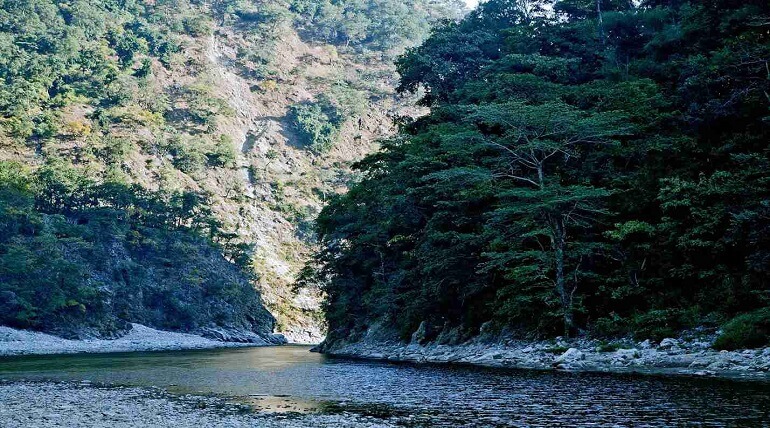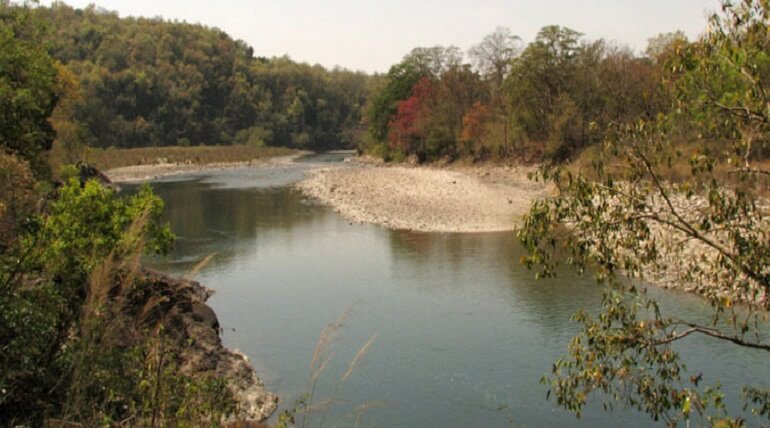
The Ramganga is occupied by key oceanic species like mahseer fish, the jeopardized gharials, mugger crocodiles, otters and turtles. Numerous types of winged creatures, in the same way as kingfishers, fish-birds, terns and storks rely on upon the Ramganga. Amid winters the Ramganga supply pulls in numerous transient feathered creature species, particularly water birds from Europe and Central Asia.
? FAQs – Ramganga River in Jim Corbett National Park
1. What is the Ramganga River?
The Ramganga River is a major rain-fed river in northern India that flows through Jim Corbett National Park and is considered the lifeline of the park, supporting its entire ecosystem.
2. Where does the Ramganga River originate?
The river originates near Gairsain in the Lower Himalayas (in Uttarakhand) before flowing through valleys and eventually entering the plains.
3. How long does the Ramganga flow through Jim Corbett National Park?
Inside the park, the Ramganga flows for approximately 40 km from near Marchula to Kalagarh, where it exits the forests and enters the plains.
4. Why is the Ramganga River important to Corbett National Park?
Without the Ramganga, Jim Corbett National Park would not exist, since it is the largest and most reliable perennial water source for wildlife, plants, birds, and other aquatic species.
5. What kinds of wildlife depend on the Ramganga River?
The river supports aquatic animals like mahseer fish, mugger crocodiles, otters, and endangered gharials, and attracts a wide range of birds including kingfishers, fish-eagles, terns and storks.
6. Do migratory birds come to the Ramganga?
Yes — during winters, the Ramganga reservoir and riverbanks attract many migratory waterbirds from Europe and Central Asia.
7. Does the Ramganga River connect with other rivers?
While flowing through the park, the Ramganga collects water from tributaries like the Palain, Mandal, and Sonanadi rivers.
8. Can visitors see wildlife around the Ramganga?
Yes — wildlife such as tigers, elephants, birds, and reptiles often come to the riverbanks for water, making it a prime area for sightings during safaris near parts like Dhikala.
9. Can people do activities on or near the Ramganga River?
Outside the core wildlife zones, visitors often enjoy boat rides, riverside picnics, nature walks, and in some stretches even fishing or angling with permits.
10. Where does the Ramganga go after leaving Jim Corbett National Park?
After exiting Corbett near Kalagarh, the river continues through the Indo-Gangetic plains and eventually drains into the Ganges River in Uttar Pradesh.